Monthly Archives: November 2016

Harold Leofric Helsdon

Harold Leofric Helsdon was born on 18th November 1896. He was the eldest son of Horace John Helsdon, an architect, and Flora, the eldest daughter of W. Franklin Dickson. He was admitted to Ashburnham House as an exhibitioner in September 1910 and made a monitor in Lent Term 1914.

Harold was made Head of Ashburnham in Play 1914, and although he was not an entirely successful Head of House, he seems to have been reasonably well-liked. His successor wrote the following, rather equivocal, account of Harold’s year as Head of House in the Ashburnham Ledger:

“Helsdon had a great many natural advantages, but he made very little use of them during his last year. He was clever to a very high degree and probably his last year’s behaviour here will cause him much regret and sorrow. Helsdon was extremely good-natured and pleasant to get on with in House matters. In the matter of punishments etc. I consider him to have been scrupulously fair and justÔǪ Helsdon was not much use at games, but he was decidedly keen on them and set the House a good example which I believe has been well followed. Financially Helsdon left the House slightly in debt which should not have been the case ÔǪ Finally I trust and hope that Helsdon will have greater success in his future. He is at present in the Inns of Court OTC and expects a commission shortly.”

(J.L. Strain, Lent 1915)

After leaving the school at Easter 1915, Harold entered the Inns of Court Officer Training Corps. He became a 2nd Lieutenant for the 3rd Battalion (Reserve) Dorsetshire Regiment on the 28th July of that year. He was attached to 1/7th Battalion Royal Warwickshire Regiment, and went out to the western front in June 1916, where he acted first as bombing officer, and afterwards as intelligence officer.
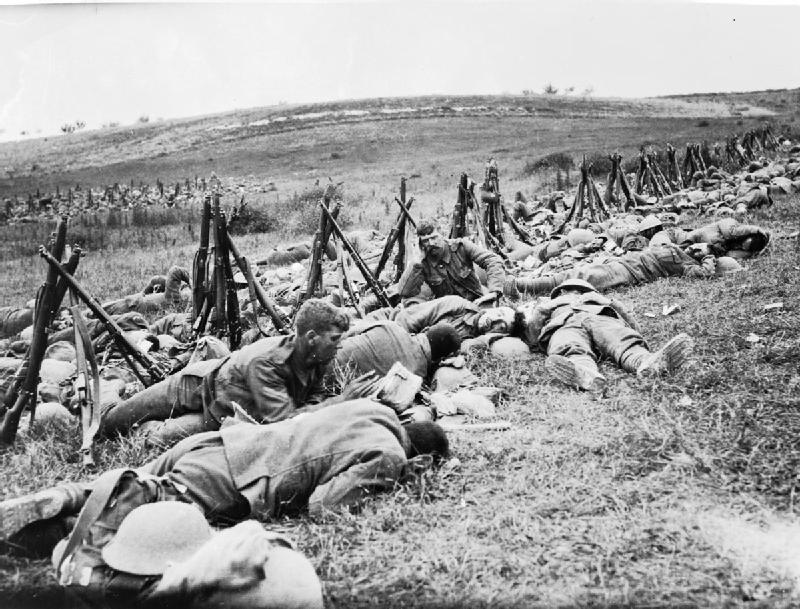
The Royal Warwickshire Regiment resting during Battle of the Somme 1916

Just a week after his 20th birthday, on the night of the 25th and 26th November 1916, Harold was killed in night patrol work near Butte de Warlencourt.
Posted in The Fallen | Tagged , , , , | 3 Comments

Leonard James Moon

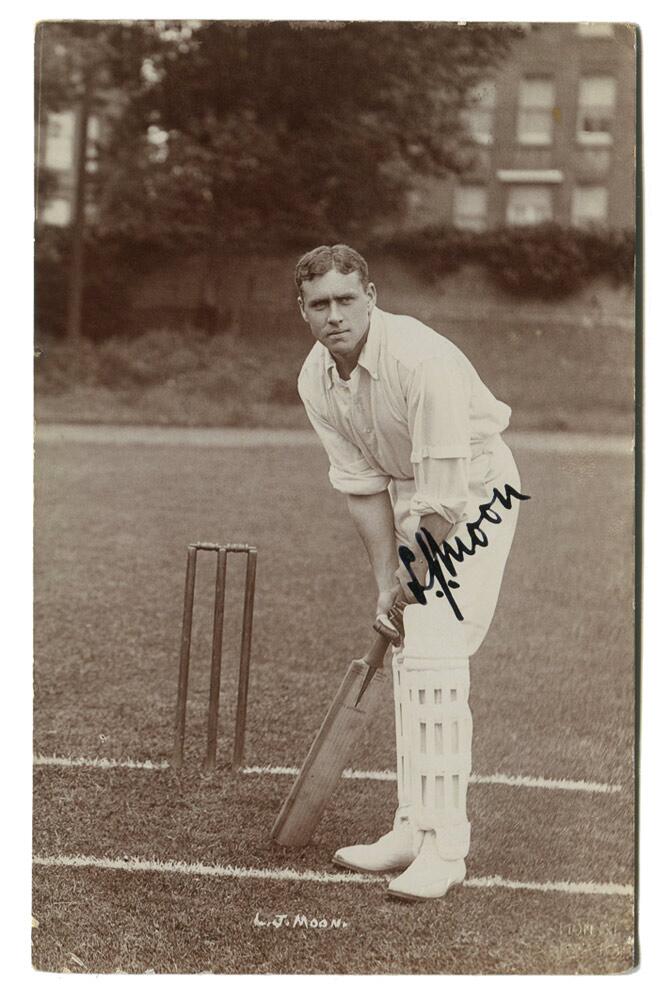
19161123_Moon,LJLeonard James Moon was at Westminster School, up Grants, from 1891 until 1896. He was the youngest of three brothers who were all exceptional athletes. Leonard was in both 1st XIs and continued to play association football whilst at Pembroke College, Cambridge and cricket of Middlesex in 1899 and 1901. In 1905 he played cricket for the national side against South Africa.

Wisden records that:

In the autumn of 1905 he was second in the averages for the M.C.C.’s team in America with 33.00, and before the next season opened toured South Africa with another M.C.C. side. During the latter tour he made 826 runs with an average of 27.33. He was a vigorous batsman who could cut well, and a useful wicket-keeper. At association football he gained high honours, obtaining his blue for Cambridge and playing for the Corinthians.

After university Leonard went into teaching and became Head Master of Wellesley House School, Broadstairs, Kent. After the outbreak of war, he enlisted in the Inns of Court Officer Training Corps, taking a commission as 2nd Lieutenant in the 10th Battalion of the Devon Regiment in February 1915. He served in France but lost his life in near Salonica in Greece.

Leonard was recorded in the school’s roll of honour as having died from wounds, but records found in The National Archives reveal that he actually committed suicide. Letters he left just before he died suggest that he was concerned about a rumour which had been spread about him and feared it would bring his regiment into disrepute. Leonard seems to have been suffering from paranoia as a result of what would now be identified as post-traumatic stress. A subsequent investigation found that his concerns were groundless.

Posted in The Fallen | Tagged , , , , , , , , , , | 2 Comments

Norman Victor Lewis

Norman Victor Lewis was born on the 12th March 1895. His father, Victor Erskine Lewis, was well known in the theatrical world. His mother, Edith, was of Scottish descent; her father came from Linlithgow. Norman was their only son and they sent him to Westminster in 1909.

He was in Rigaud’s house until 1912, when he left the school for Johannesburg to work as a clerk in the Standard Bank of South Africa. On the 11th March 1915 — at the age of 20 — Norman joined the 12th (Service) Battalion, East Yorkshire Regiment as a temporary 2nd Lieutenant. The following May, he was transferred to the 15th Service Battalion, and then sent to France.

Norman was killed in action at Beaumont Hamel, in the attack near Serre, on 13th November 1916. An eye-witness who survived that battle — Private A. F. MacPherson — wrote in his diary of the early morning attack: “we woke before the time and waited for the bombardment. It came all of a sudden like the long roll of drums, the individual sound of the explosions being merged in one long continuous rumble; appalling to hear. One moment all had been quiet – the next everything was dominated by the crashing rumble of the guns. It was hard to believe that human beings could live through such a whirlwind of fire.”

19161113_Lewis,NV

Norman is commemorated on his parents’ grave at Kensal Green Cemetery, in the London Borough of Brent, with words from the hymn Lead, Kindly Light.

And with the morn those angel faces smile,
Which I have loved long since, and lost awhile!

Posted in The Fallen | Tagged , , , , | Leave a comment

Charles Humphry Gow

Charles Gow was a member of Rigaud’s House from 1905 until 1908. He was the only son of the Reverend Henry Gow and his wife, Edith. He had a keen interest in Natural History, which may have developed at school; the Westminster’s Natural History Society was founded during his time at school. Upon leaving Westminster he studied at Emmanuel College, Cambridge before training as a doctor at St. Bartholomew’s Hospital.

He joined the navy as a surgeon, shortly before the outbreak of the war, and served on the destroyer HMS Laforey. After returning home to complete his medical training, he served with the Royal Naval Division in Gallipoli and Salonica before going to the Western Front in early 1916. He was killed while attending to the wounded near Beaucourt-sur-Ancre, France. A letter to his father from Lieutenant Commander Bernard Ellis provides further information:

I am more sorry than I can say to have to inform you of the death of your son Surgeon C.H. Gow of this Battalion who was killed in action on the 13th. He accompanied the Battalion in an attack on the German trenches, and did splendid service attending to the wounded all day long. At dusk he went out from a captured German trench to look after wounded lying in the open, and then he was hit by machine gun fire in two places. He was brought in and died of his wounds not long afterwardsÔǪI knew him pretty well and I admired him extremely: he was so upright, honest and fearless. His last action was very typical of him, for when he was dying he wrote three notes, thinking entirely of others and not at all of himself. One note I believe has been sent to your wife; another was to direct that his medical staff should have his things and here and any parcels coming for him, the third was to recommend two of his staff for their devotion to duty — their names have been sent in for reward. I think your son was one of the finest men I have ever known, and I offer you and your wife my greatest sympathy in your loss. All the officers of this Battalion unite to praise him, and his own medical staff were quite devoted to him.

19161113_Gow,CH
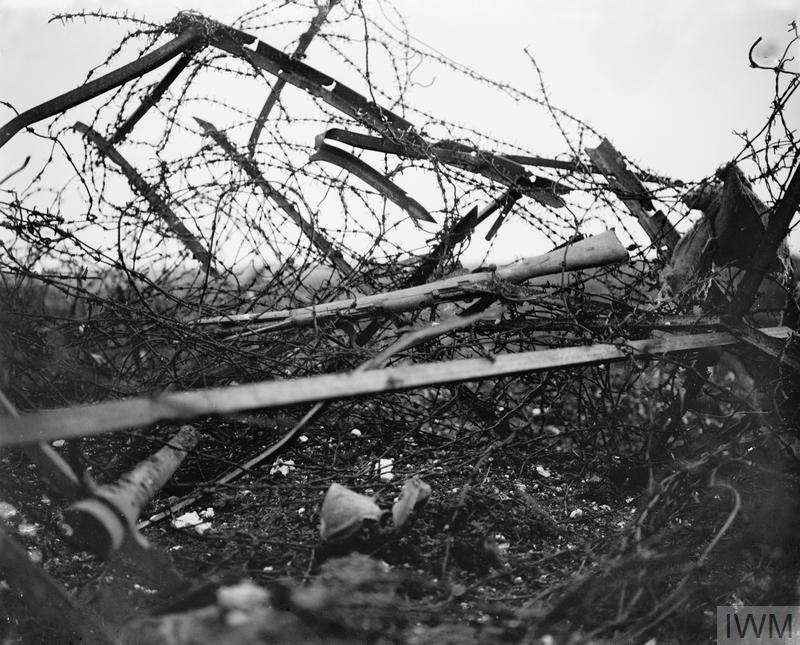
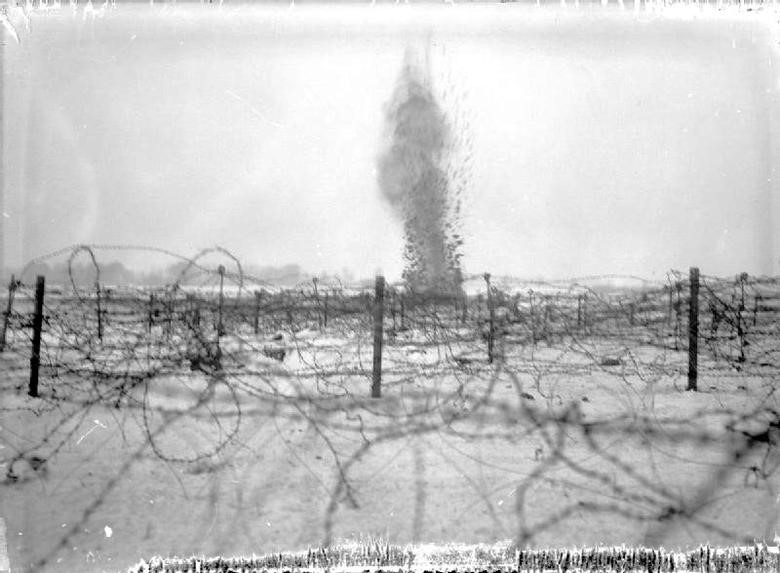
German barbed wire entanglement at Beaucourt-sur-Ancre after the village was captured on 14 November 1916, by 63rd (Royal Naval) Division during the closing phase of the Battle of the Somme.
Posted in The Fallen | Tagged , , , , , , | Leave a comment

D’Arcy Algernon Cuthbert Dillon O’Flynn

D’Arcy O’Flynn was born on the 12th November 1885 to John James Dillon O’Flynn, of Kensington, and Elizabeth Louisa, the eldest daughter of George William Lowe, of Southampton, Hampshire. Unfortunately, when D’Arcy was 9 years old, his family was caught up in scandal.

His parents had married in Madras in 1876 and were living in Houlgate, Dulwich. However, John had been systematically swindling two women — Emma Eliza Bevan and Hetty Michell — out of hundreds of pounds, by claiming to be investing their money in white lead and iron ore companies. Posing as a single man, he had made advances on both women, and even went so as to promise marriage to Miss Michell. Hetty Michell called the wedding off upon discovering the existence of John’s wife and family, but John told her that “the woman you are pleased to call Mrs. O’Flynn is not my wife, and has nothing to do with me”. John O’Flynn was found guilty of fraud and was sentenced to five years’ penal servitude on the 23rd July 1894.

The devastating impact of this scandal upon D’Arcy and his sister and three brothers — not to mention their mother — is uncertain. However, five years later, D’Arcy and one of his brothers, Albert, found themselves at Westminster School. D’Arcy joined Ashburnham in 1899, and left in July 1902.

In December 1906, D’Arcy emigrated to Canada, where he became a farmer. He enlisted in the 47th Battalion Canadian Infantry in May 1915 and was promoted to Sergeant that December. He went out to the western front July 1916 and was at the Canadians’ first major battle of the war at Courcellette, Somme. On the 10th November, D’Arcy was wounded in action and he died the following day — the day before his 31st birthday.

19161111_O'Flynn,DACD
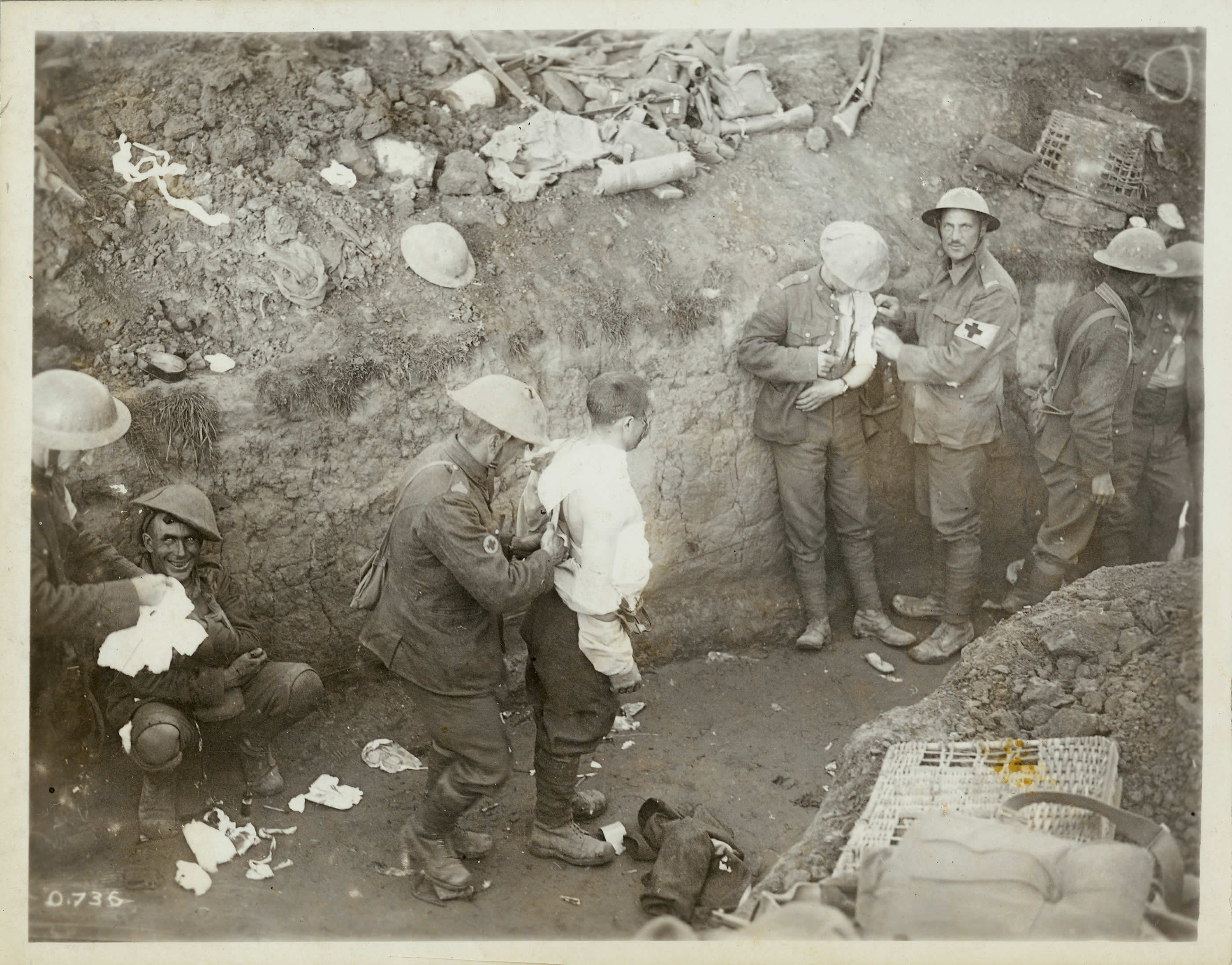
Medical orderlies tending to the wounded in a trench during the Battle of Courcelette
Posted in The Fallen | Tagged , , | Leave a comment